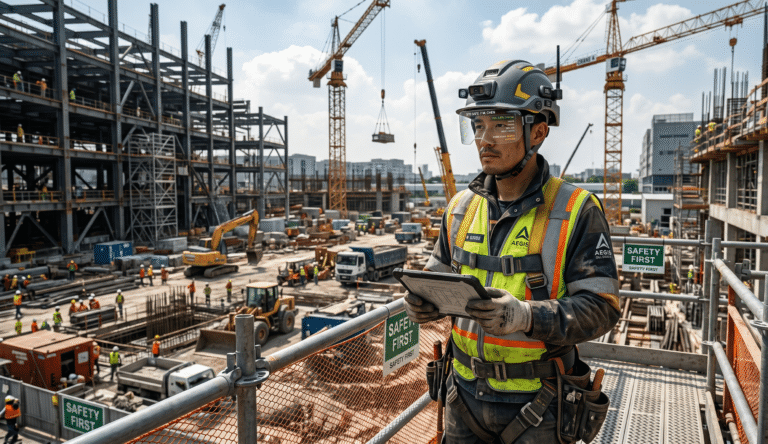
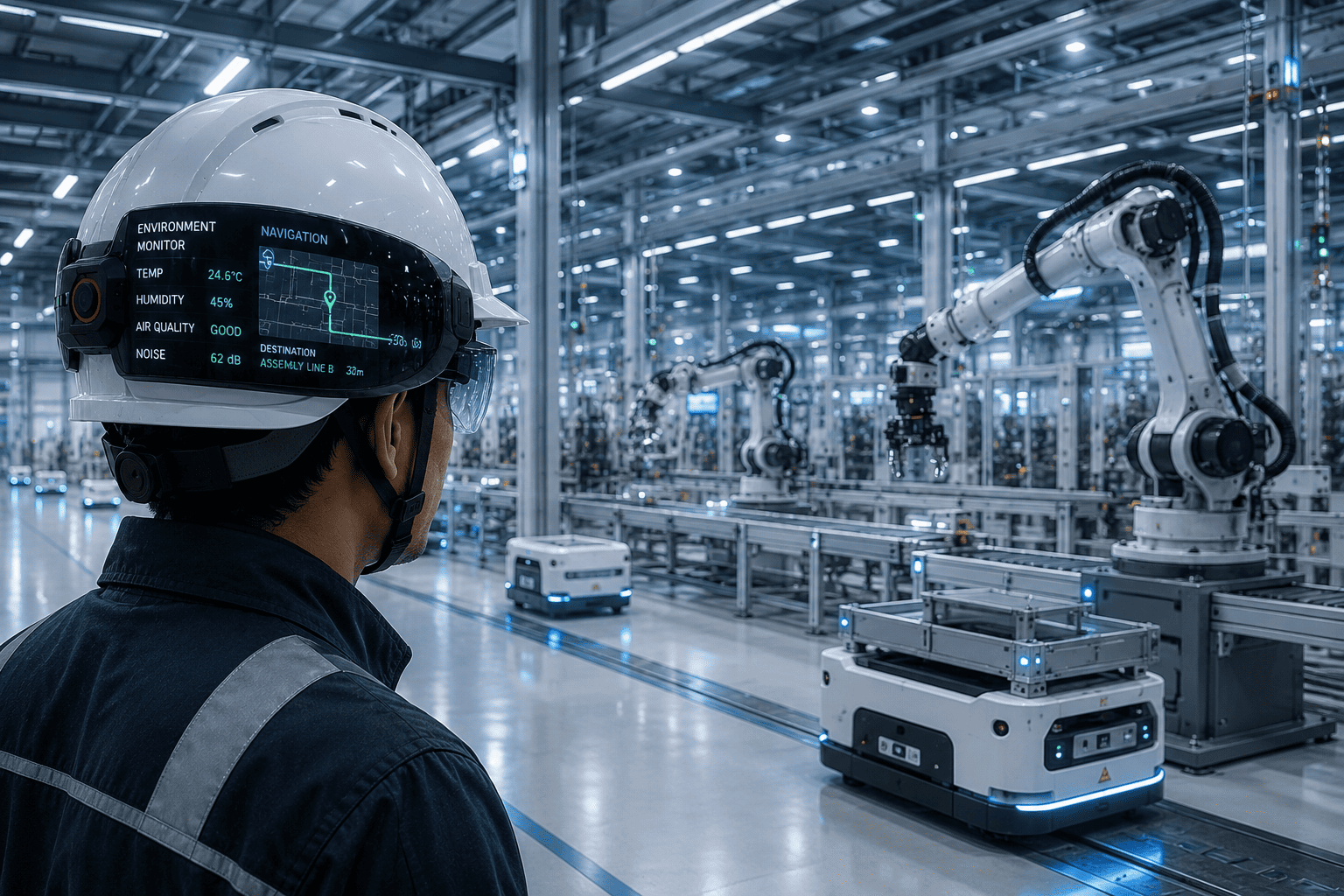
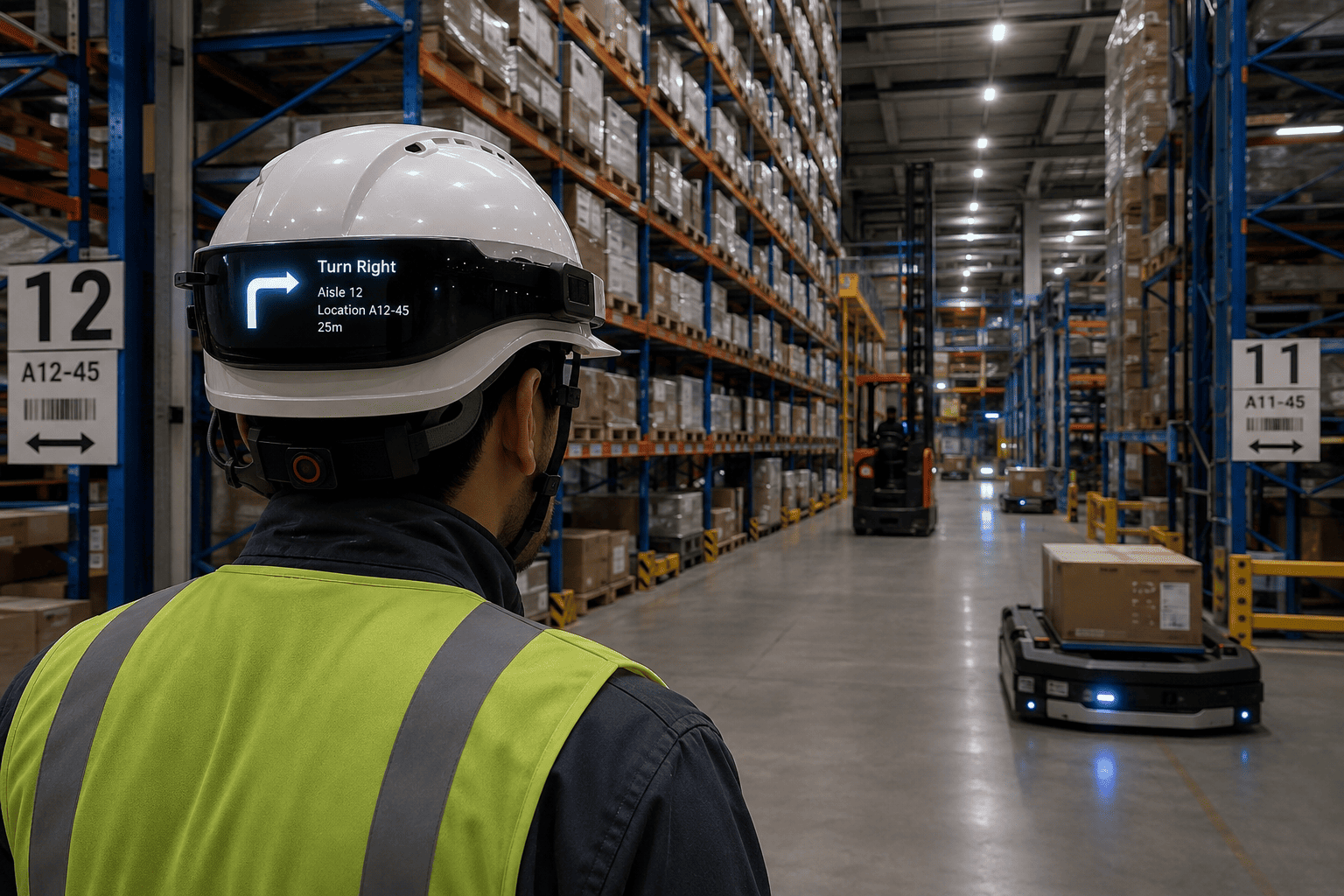
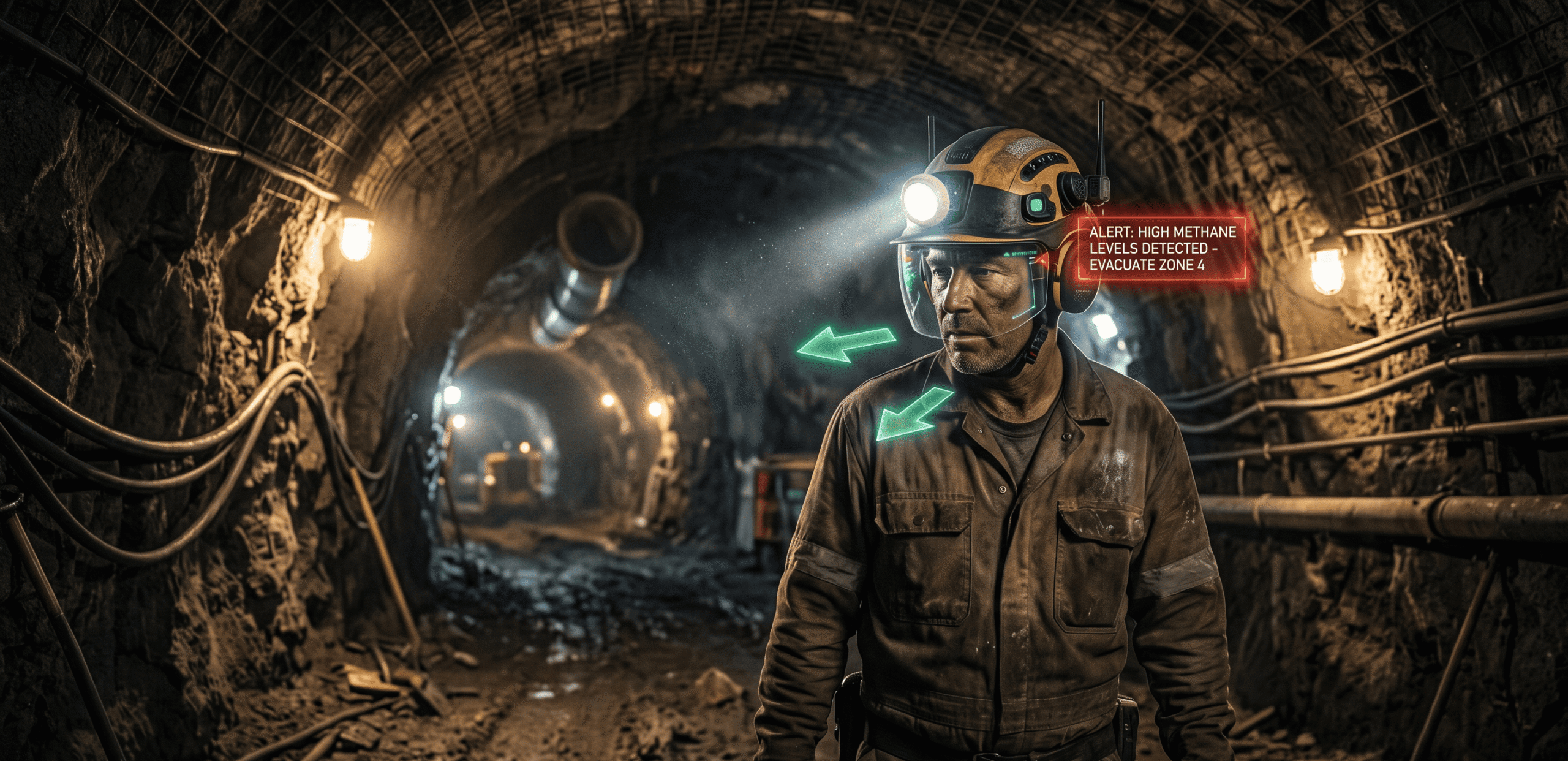
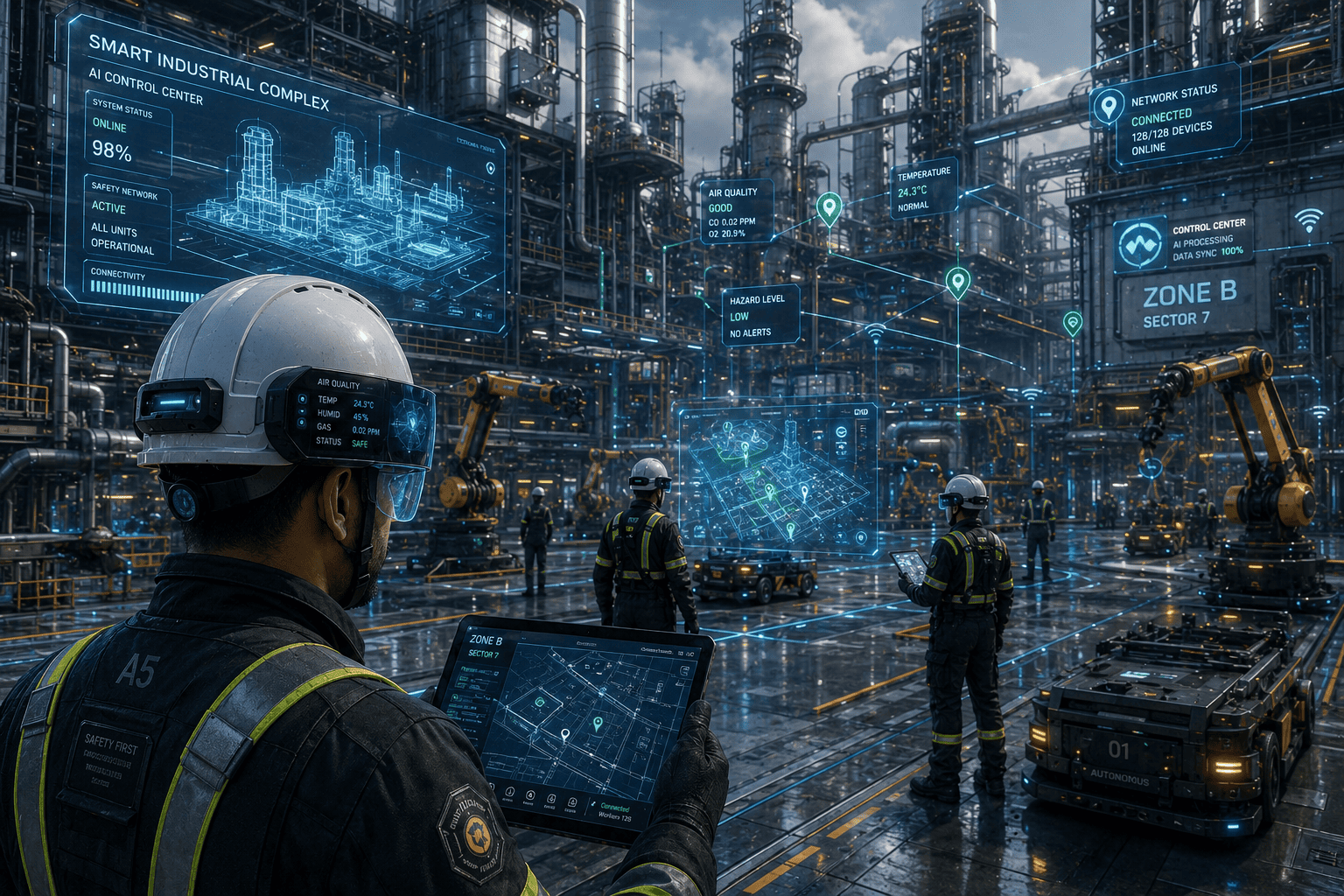
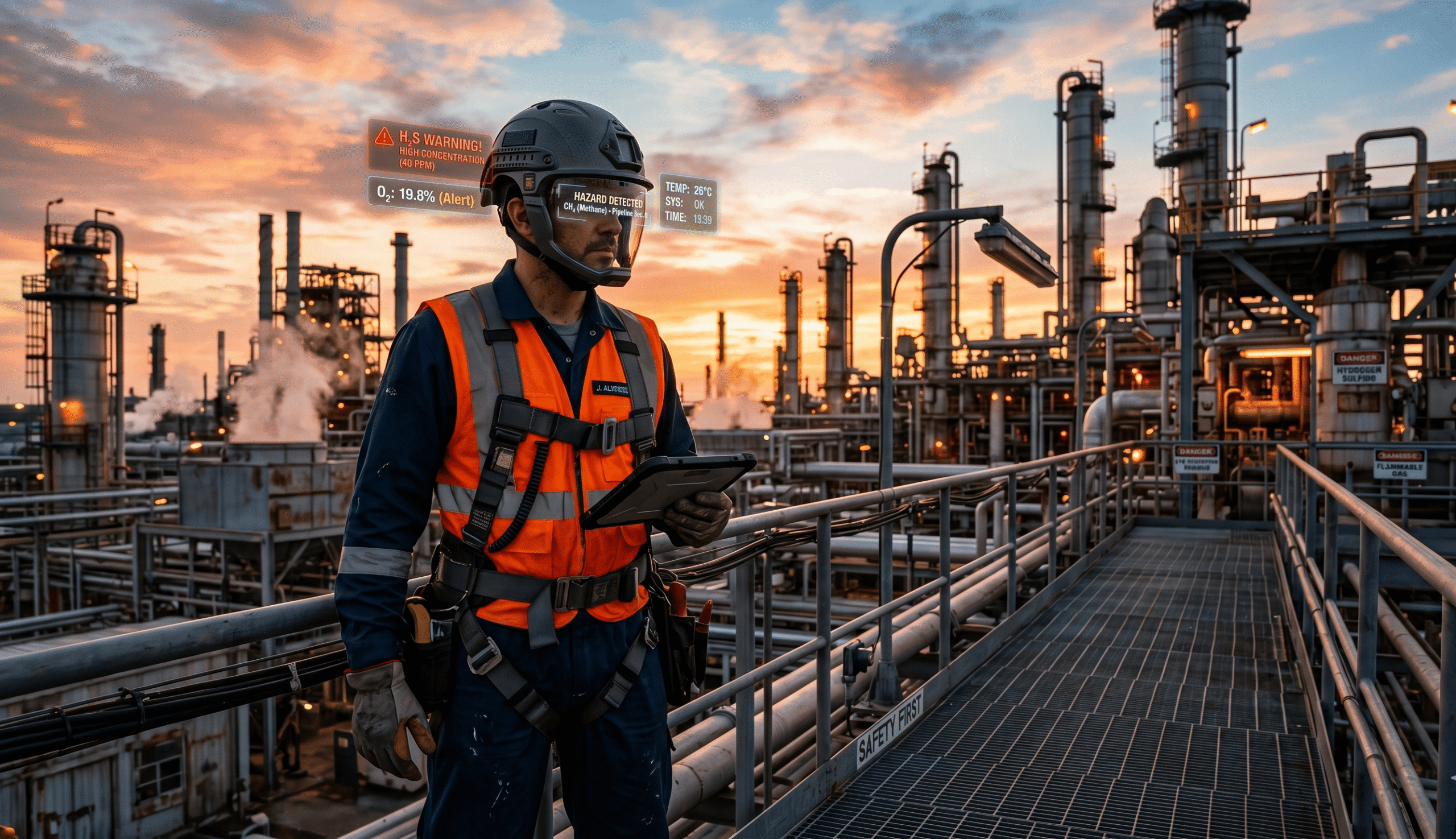
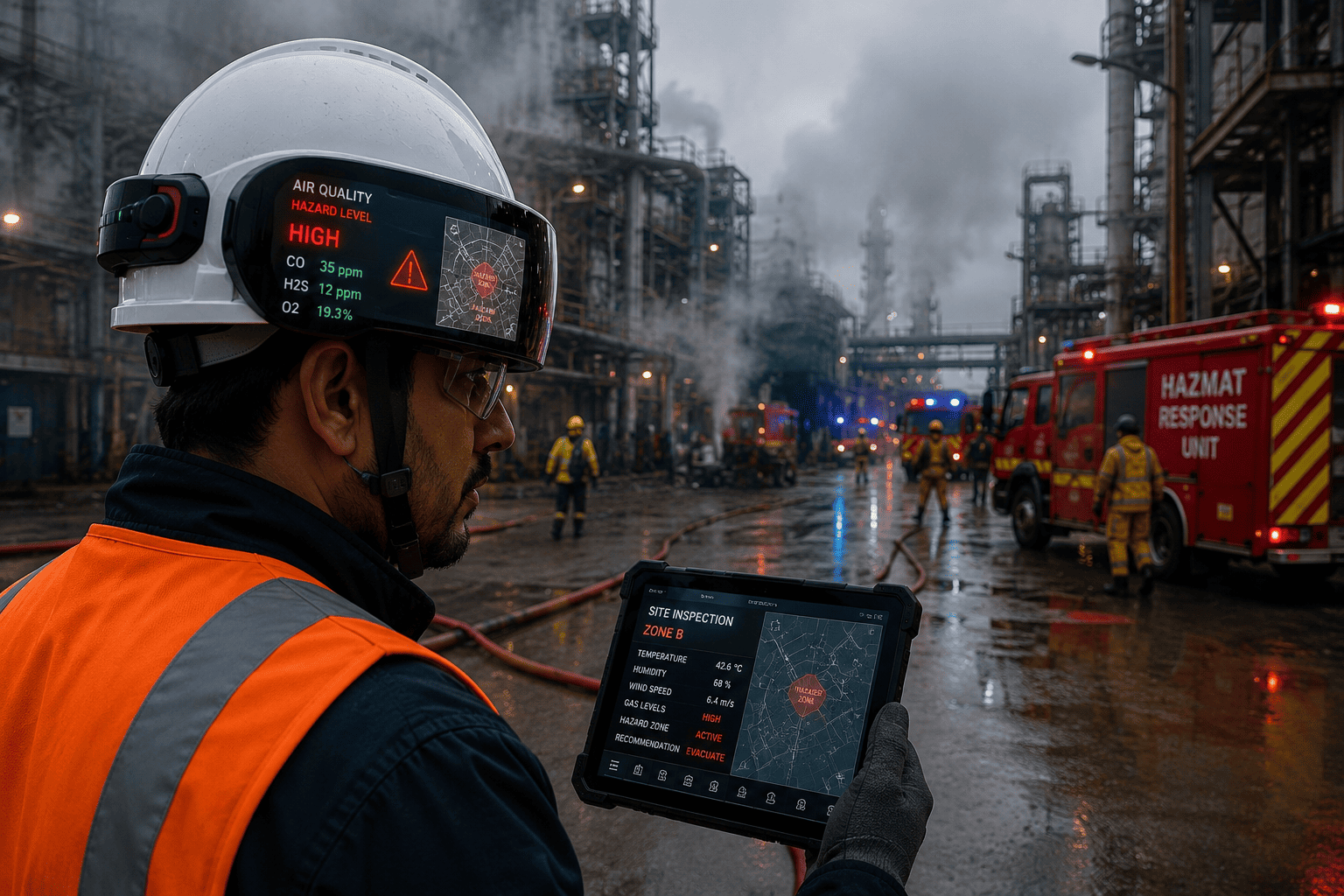
In many industrial environments such as construction sites, factories, mines, and warehouses, workers are exposed to hazardous conditions. Lack of proper monitoring and navigation can increase the risk of accidents and unsafe working environments. The Smart Helmet is designed to enhance worker safety by integrating environmental sensors and indoor navigation technology. This system helps monitor conditions in real time and ensures workers remain safe while performing their tasks.
Workers in high-risk industries often face dangerous situations such as low oxygen levels, extreme temperatures, and high humidity. In addition, large industrial facilities can make navigation difficult, increasing the chances of workers getting lost or entering unsafe areas. There is a need for a smart safety solution that can monitor environmental conditions and track workers indoors to improve safety and reduce risks.
The goal of this project is to develop a Smart Helmet that improves worker safety in hazardous environments by providing real-time monitoring, indoor navigation, and alerts for unsafe conditions. The system aims to create a safer and more efficient workplace.
Enables real-time tracking and navigation for workers in complex or hazardous environments. This ensures workers stay on the correct path and reduces the risk of getting lost in large industrial spaces.
Continuously monitors oxygen levels to ensure workers are in a safe breathing environment.
Detects abnormal temperature changes to help prevent heat stress or exposure to extreme temperatures.
Monitors humidity levels and alerts workers when the environment becomes unsafe or uncomfortable.
Hardware :
Software :
Got questions? Ideas? Fill out the form below & our specialist will contact you.